
News
MusicFutures and LJMU Announce New PhD Research into Immersive Media, Digital Culture, and Future Music Experiences
Beyond the Optimised: Noise, Uncertainty and Collective Resonance in Future Hybrid Environments
MusicFutures and Liverpool John Moores University (LJMU) are supporting a new PhD research project by Scott Jones, funded through the LJMU / MusicFutures Studentship in Immersive Media, Digital Culture, and Future Music Experiences. The project, Beyond the Optimised: Noise, Uncertainty and Collective Resonance in Future Hybrid Environments will explore how future music, immersive and hybrid environments might support deeper forms of collective experience.
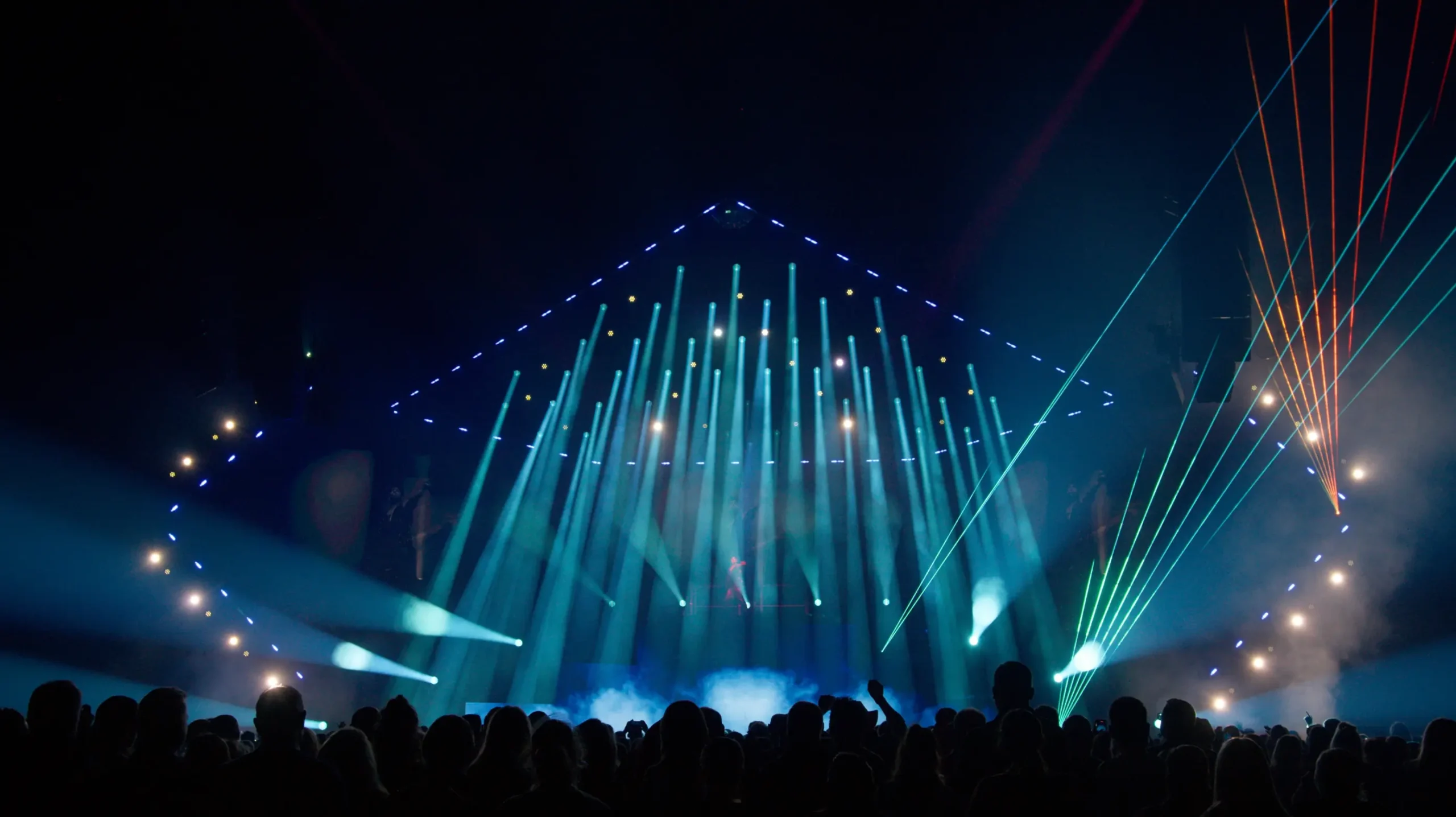
The research begins with something music has always been particularly good at: bringing people together. Rhythm, movement, improvisation, repetition and shared attention can produce powerful moments of synchrony and collective connection. Scott’s research asks what might happen if these qualities became part of how we design future digital and immersive spaces.
Central to the research is the idea of collective resonance, moments when individual behaviours begin to interact and something shared is recognised between participants. Rather than designing experiences that prescribe particular actions or optimise people towards predetermined outcomes, the research will investigate how technology might sense and amplify behaviours already occurring within group settings.
Speaking about the Studentship, Scott Jones says:
“I’m really excited to begin the PhD with MusicFutures and to have the opportunity to build on the practice and research I’ve already been developing. I’m particularly interested in what happens between people during shared experiences, those moments of synchrony, resonance and connection we feel in physical spaces and how we might design future technologies that create room for those things to emerge.”
Through practice-based experiments, Scott will explore physiological and embodied signals including heart rate, movement and stillness, using them as material for sound, light and immersive experiences. Existing projects of Scotts’s: Hemodynamic Disco, Civil Signals and FanField provide a developing body of work through which these ideas can be tested with a range of participants.
The research will draw on ideas around ritual, collective effervescence, resonance, improvisation and uncertainty, alongside practical experimentation with audiences and collaborators. Ultimately, the PhD aims to explore an alternative approach to future music technology, one in which technology does not simply demand more interaction, data or attention, but uses the social technologies inherent in music to help make the relationships that form between people more perceptible.
And the research asks a broader question: as our digital environments become increasingly personalised, predictable and optimised, how might music help us design technologies that leave room for uncertainty, emergence and genuinely shared experience?
Dr Hatana El-Jarn, MusicFutures XR, Culture & Community, LJMU Co-Lead added:
“Music offers a rich starting point through its capacity to create belonging, shared meaning and collective joy. By exploring uncertainty, ritual and embodied participation, Scott’s work asks how future digital environments might leave room for experiences that emerge between people. I’m excited to support research that connects these possibilities with broader questions about agency, community and cultural life.”
Related articles



Get Involved in the Future of Music
Join the network shaping innovation across the music sector.