
News
PhD Studentship Announcement: Venya Krutikov – Reimagining Music Spaces: Introducing the Distributed Venue
MusicFutures, CAVA (Centre for Architecture and the Visual Arts) and the Institute of Popular Music (IPM) are supporting a new PhD research project by Venya Krutikov, funded through the University of Liverpool’s MusicFutures Studentship, Reimagining Music Venues: Spatial, Digital & Experiential Innovation in Live Music.
Titled The Distributed Venue: Networked Environments and New Forms of Live Music Space, the project explores how connecting cultural spaces might create new forms of shared experience across physical distances.
The research begins with the audience rather than the stage. Much of what makes a live event powerful, whether a gig, a performance or a shared gathering, comes from the crowd itself: the collective energy that builds when a room full of people becomes aware of itself. Venya’s research asks – could audiences in different venues become aware of one another, sharing a sense of collective presence without diminishing the experience of being there?
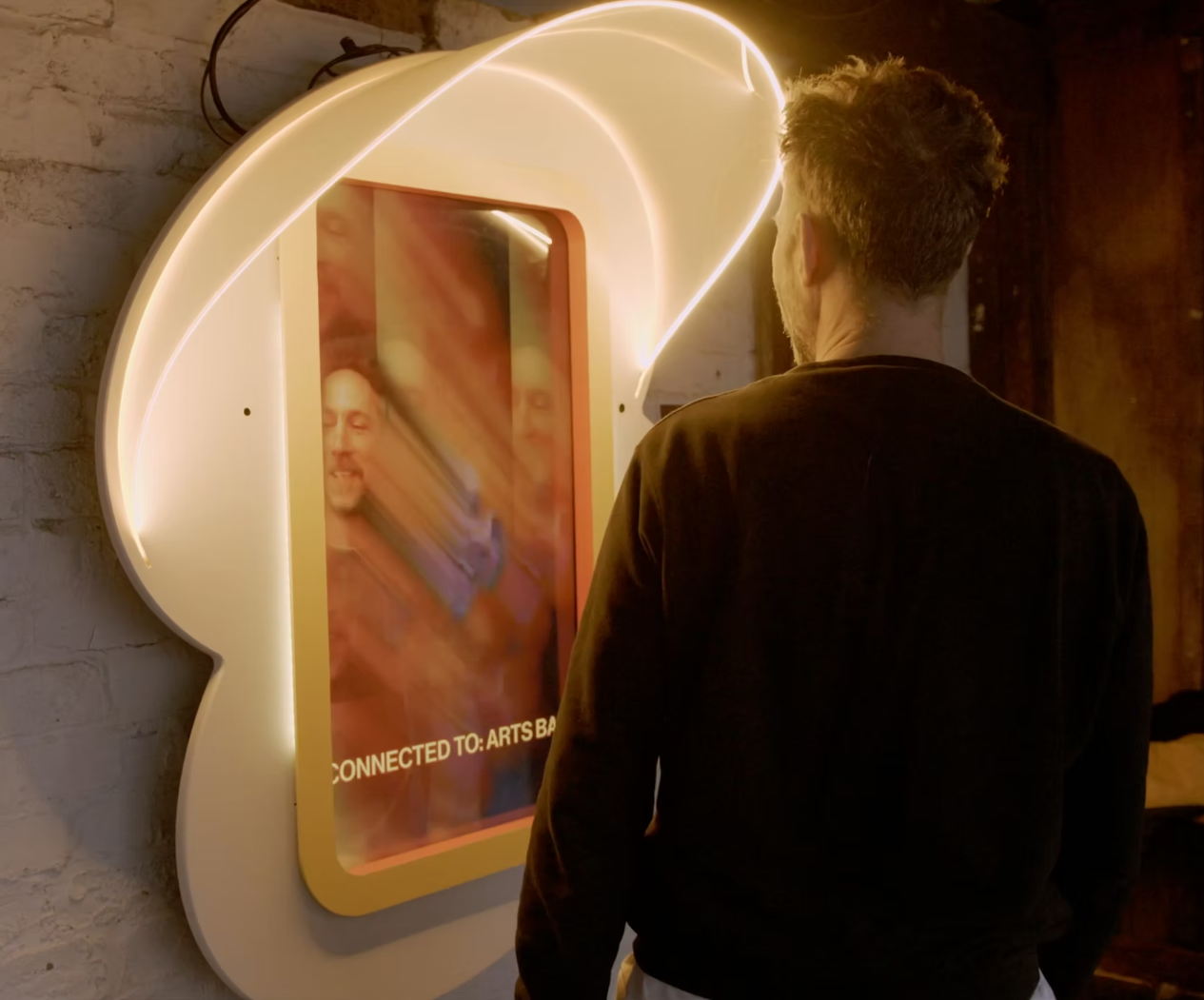
Central to the research is the idea of the distributed venue: a network of spaces linked through responsive digital infrastructure, with each retaining its own room, audience and character. Music venues provide the starting point, but the same thinking extends to theatres, galleries, clubs and other places where people come together to share an experience. Rather than streaming an event from one location to another, the research explores a more subtle form of connection: a fleeting exchange between rooms, experienced through objects and installations that belong to the building rather than to a screen.
Speaking about the Studentship, Venya Krutikov says:
“I am really excited to be starting this PhD with MusicFutures and to take the time to thoroughly investigate and develop practice-based research in a field I find fascinating. The possibilities for expanded interconnected cultural spaces are vast, and the technological capabilities could unlock a whole new mode of embodiment. I am keen to lead a body of work to explore these capabilities and to bring in my personal professional experience to help guide the process. I have always been interested in creating environments that allow audiences to suspend their disbelief, to become fully immersed and present, I believe there is scope to translate that full body experience into a telepresent experience.”
Professor Richard Koeck, Director, MusicFutures added:
“We are really pleased for Venya to embark on this journey with us and we look forward to having such an experienced artist and entrepreneur within the Liverpool City Region music ecosystem.”
Through a series of practical experiments, Venya will investigate how live presence can pass between rooms, using light, sound and responsive objects as the material for that connection.
The research builds on his extensive creative practice as co-founder of The Kazimier and Invisible Wind Factory in Liverpool, and his contributions to MusicFutures’ collaboration with CoSTAR for the Grassroots Music Venue Innovation Call, building the TeleSync network of connected venue portals, as well as interactive installations for festivals such as Liverpool’s River of Light.
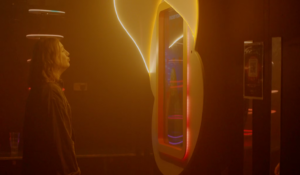
Working with venue operators, artists and audiences, the research will also explore what creative possibilities can be made for connected space: new instruments, performances and artworks that unfold across several locations at once, in which distance and delay become creative material.
The ambition is to create telepresent states that feel as vivid as being physically present in the room. Imagine a fully embodied space, physical, social and alive, alongside a networked layer that quietly extends it. In this context, the walls of a venue stop being where the experience ends. A single event could belong to many rooms at once, with audiences sensing that they are part of something larger than the space they occupy.
At its heart, The Distributed Venue: Networked Environments and New Forms of Live Music Space asks a broader question: can collective experience be built across distance, and what might cultural life become when the borders between its spaces begin to dissolve?
Related articles


Get Involved in the Future of Music
Join the network shaping innovation across the music sector.